

Ireland’s first-time buyer supports are nationally standardised but tightly rule-based. In 2026, they centre on a small number of schemes with clear financial caps and eligibility criteria.
The Help to Buy scheme offers a tax rebate of up to €30,000 or 10% of a new-build price, capped at €500,000, and runs until end of 2029. The First Home Scheme adds a shared equity contribution of up to 30% for new homes within regional price ceilings, including €500,000 in Dublin, reduced to 20% when combined with Help to Buy.
For buyers who cannot secure full bank financing, the Local Authority Home Loan provides a state-backed mortgage option, with Dublin-area price limits proposed around €415,000 in 2026. The Local Authority Affordable Purchase Scheme and LDA developments offer below-market homes in exchange for an equity stake.
Buyers considering refurbishment have a separate route. The Vacant Property Refurbishment Grant offers up to €50,000, rising to €70,000 for derelict homes, and is funded through to 2030.
Crucially, these schemes are not universally compatible and are mostly restricted to new builds or specific property types. They also operate within Central Bank mortgage rules, including the 4x income lending limit and 10% minimum deposit, which ultimately determine how much support any individual buyer can actually use.
Table of Contents
Am I a First-Time Buyer in Ireland?
In Ireland, a first-time buyer is someone who has never previously purchased or built a residential property, either in Ireland or abroad, individually or jointly. This status determines your eligibility for several key government schemes and affects your mortgage deposit requirement.
Binary. No grey area. If you’ve ever owned a residential property anywhere in the world, you’re not a first-time buyer for the purposes of Irish government schemes, even if that property was sold years ago, even if you didn’t live in it, and even if it was abroad.
Worth confirming early. Some buyers discover mid-application that a previous ownership arrangement disqualifies them. Find out now, before you build a financial plan around supports you may not be entitled to use.
What Government Schemes Are Available for First-Time Buyers in 2026?
Ireland has more first-time buyer schemes than most buyers realise, and more ways to combine them badly. They’re not interchangeable. The right combination depends on your income, the property type you’re targeting, and whether you’re buying new or second-hand.
Help to Buy Scheme
The Help to Buy scheme is a tax refund, not a grant. It refunds Income Tax and DIRT paid in Ireland over the previous four tax years, up to a maximum of €30,000 or 10% of the purchase price, whichever is lower.
To qualify, the property must be a new build or self-build costing no more than €500,000, and you must take out a mortgage of at least 70% loan-to-value. The home must be your principal private residence. The HTB scheme has been extended until 31 December 2029, which gives buyers reasonable planning certainty. A five-year clawback rule applies if you sell or stop living in the property before that period ends.
For buyers targeting new developments in Dublin, the HTB scheme is often the most straightforward way to close the deposit gap. Applications are processed through Revenue MyAccount.
| Maximum benefit | €30,000 or 10% of purchase price, whichever is lower |
| Property type | New build or self-build only |
| Price cap | €500,000 |
| Mortgage requirement | Minimum 70% loan-to-value |
| Scheme end date | 31 December 2029 |
| Clawback period | 5 years |
| How to apply | Revenue MyAccount |
First Home Scheme
The First Home Scheme is a shared equity scheme. Where your mortgage and savings fall short of the purchase price, the State and participating banks can bridge that gap by taking a percentage equity stake in your home.
The scheme can contribute up to 30% of the market value of the property. If you’re also using Help to Buy, that maximum reduces to 20%.
In 2026, the price cap for eligible properties in Dublin is €500,000. Price caps are reviewed every six months, with the next review expected in mid-2026.
The First Home Scheme is available for new build homes and first-time self-builds. A 2026 update also extended eligibility to tenant home purchase cases where a landlord is selling to the tenant.
There are no strict income limits built into the First Home Scheme itself. Eligibility is based on borrowing capacity. You must demonstrate that you are applying for the maximum mortgage available to you under Central Bank lending rules, typically four times your gross income, before the scheme can step in to bridge the remaining gap.
Participating lenders include AIB, Bank of Ireland, EBS, Haven, and PTSB. You can check your eligibility and apply directly at firsthomescheme.ie.
Which First-Time Buyer Schemes Can Be Combined in Ireland?
Buyers make their most expensive mistakes here. The rules are specific.
The smartest buyers in 2026 aren’t picking one scheme, they’re combining them. Here’s what can be stacked and what can’t.
| Combination | Compatible? |
| Help to Buy + First Home Scheme | Yes, but First Home equity share reduces from 30% to 20% |
| First Home Scheme + Local Authority Affordable Purchase Scheme | No |
| First Home Scheme + Local Authority Home Loan | No |
If you’re considering more than one scheme, confirm compatibility before you build your financing plan. The incompatibility between First Home and Local Authority routes catches buyers out regularly.
Local Authority Affordable Purchase Scheme
The Affordable Purchase Scheme is a separate route entirely. Under this scheme, eligible buyers can purchase a home below market value. The local authority retains an equity share reflecting the discount provided, and this affordable dwelling purchase arrangement continues until you buy out that stake or sell the property.
Eligibility is based on a means test and income limits set by the relevant local authority. The scheme is designed for buyers who earn decent money but cannot bridge the gap to Dublin market prices without support. A nurse and a primary school teacher in their early thirties, both working full-time, both unable to get near a three-bed semi on two incomes. That’s who this scheme exists for.
The main practical difference from the First Home Scheme is that the affordability support is built into the purchase price itself, rather than sitting on top of a market-rate transaction. For the right buyer in the right area, it’s a materially better deal. The tradeoff is that supply is limited and availability depends on what your local authority is delivering.
LDA Affordable Homes
The Land Development Agency is a separate but related route worth knowing about, particularly for Dublin buyers. The LDA builds and sells homes on State land at below market value, operating through an equity share model similar to the Affordable Purchase Scheme. The difference is that LDA developments are delivered at a national level rather than through individual local authorities, which means supply can appear in areas where your local authority has nothing available.
For Dublin buyers, LDA schemes are worth monitoring closely. Applications are made through lda.ie or through the sales portals attached to active developments. Availability changes as new phases launch, so if you’re in the income bracket where open market prices are out of reach, checking lda.ie alongside your local authority’s affordable housing listings gives you the fullest picture of what’s actually on offer.
Local Authority Home Loan
The Local Authority Home Loan is a Government-backed mortgage for first-time buyers who can’t secure sufficient financing from a mainstream lender.
Updated property price limits proposed in February 2026 are as follows:
| Region | Property Price Limit |
| Dublin, Wicklow, and Kildare | Up to €415,000 |
| Cork, Galway, and Meath | Up to €375,000 |
| Most other counties | Up to €310,000 |
Income limits have also been under review, with proposed updated thresholds reflecting house price inflation. Buyers should check the live figures on the official Local Authority Home Loan website before making decisions, as these limits are subject to confirmation.
This loan is not compatible with the First Home Scheme.
Vacant Property Refurbishment Grant
If you’re open to buying a property that needs work, this grant is worth knowing about before you rule out anything based on condition alone.
The Vacant Property Refurbishment Grant provides up to €50,000 for a vacant property, with a €20,000 top-up available for derelict properties, bringing the total potential support to €70,000. The scheme runs until 2030 and uptake has been strong, particularly in areas where older housing stock is available at lower prices.
For Dublin first-time buyers, this matters most in the sub-€350,000 bracket. If you’re looking at a period property in Dublin 7 or an older terrace in Dublin 5 that needs significant investment, the grant can meaningfully change the affordability calculation. A property that looks borderline on purchase price alone may become viable when you factor in up to €70,000 toward the renovation. The funds are released on completion and inspection of the works, not upfront, so you’ll need to finance the renovation separately in the first instance, worth planning for.
How Much Can I Borrow as a First-Time Buyer in Dublin?
The Central Bank of Ireland sets lending limits that apply regardless of which lender or scheme you use.
As a first-time buyer, you can generally borrow up to four times your gross annual income. Some lenders can apply exceptions allowing up to 4.75 times income for eligible applicants, but those exceptions are limited. Not guaranteed.
Your minimum deposit is 10% of the property value. Saving above that threshold will strengthen your application and reduce your mortgage capacity risk.
Mortgage approval in principle before you start viewing is non-negotiable in Dublin. Sellers and their agents take offers from buyers with AIP far more seriously than those without. In a competitive bidding situation, not having approval in principle does not just weaken your offer in the abstract. It means watching a property you wanted go to someone else while your paperwork is still in a drawer.
Budget approximately 12% of the purchase price to comfortably cover your deposit and all transaction costs combined. Transaction costs include stamp duty at 1% on properties up to €1 million, legal fees for conveyancing typically ranging from €1,500 to €3,000 plus VAT, a valuation fee, and a structural survey if you’re buying second-hand. Mortgage protection insurance and home insurance are mandatory requirements of your lender.
Buying on a single income in Dublin
It’s achievable, but the maths are tighter. On a single income of €55,000, the standard 4x rule gives you a mortgage of €220,000. Add a 10% deposit saved separately and you’re working with roughly €245,000, which limits your Dublin options considerably. The Help to Buy scheme and First Home Scheme can extend that reach for new builds, and the Local Authority Home Loan may be relevant if mainstream lenders won’t stretch far enough. The honest answer is that a single income below €65,000 makes Dublin city challenging without scheme support. Above €70,000 to €75,000 as a sole applicant, the picture improves meaningfully, particularly if you’re open to Dublin 5, Dublin 9, or commuter areas.
What Does Your Budget Get You in Dublin?
This is the section no mortgage broker or government website can write. It requires being in the Dublin market, not just describing it.
A question we hear regularly at this stage: is 2026 a good time to buy? Dublin house prices are forecast to continue rising, at a slower pace than in previous years, but the structural undersupply that’s driven prices for a decade hasn’t been resolved. Government supports are extended, mortgage rates have stabilised, and for buyers with a long-term horizon, the conditions are reasonable. Waiting for the market to fall hasn’t been a winning strategy for Dublin buyers over any meaningful timeframe. The more useful question is not whether now is the right moment for the market, but whether it’s the right moment for you.
Around €350,000
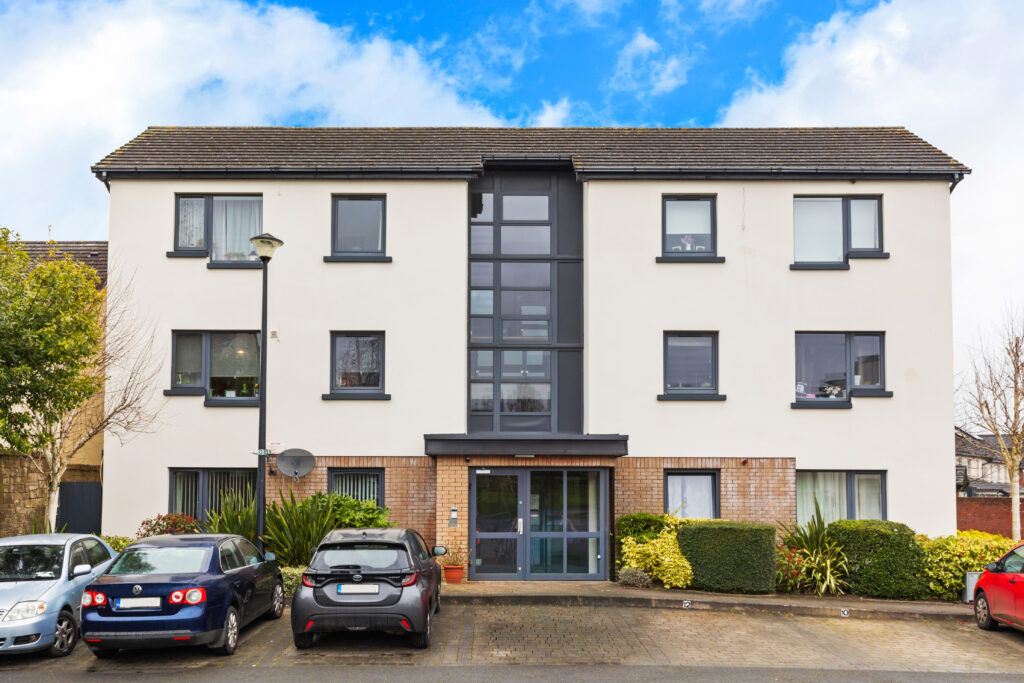
Options at this price point are limited. In Dublin city you’re mostly looking at apartments, smaller one-bed units, and older stock in north Dublin suburbs. Dublin 5 can yield a two-bed terrace in need of work at the lower end. Dublin 7 is mostly apartments or period properties requiring significant investment. If this is your budget and you want a house with a garden, the commuter towns in Meath and Kildare will give you more for your money.
One thing worth knowing at this price point: if you’re buying a vacant or derelict property that needs significant work, the Vacant Property Refurbishment Grant can provide up to €70,000 toward the renovation cost. That changes the maths considerably on a property that looks rough on first viewing.
€400,000 to €450,000
This is where the market opens up meaningfully. Two-beds and some three-beds become available in areas like Drumcondra, Phibsborough, Fairview, and Killester. Well-presented three-beds in Raheny and across the broader Dublin 5 catchment sit in this range, and they move quickly. If a property in this bracket is well-maintained and has parking, expect competition. Serious competition.
€450,000 to €500,000
Three-bed semis in established Dublin suburbs become more accessible here, including parts of Dublin 5 and Dublin 7. New builds in outer Dublin and commuter-adjacent areas targeting Help to Buy tend to cluster in this range too. You have more options, but so does everyone else at this price point.
Above €500,000
Above this threshold, you’re outside the First Home Scheme’s Dublin price cap and working with your own deposit and a conventional mortgage. The field thins out a little. So does the competition.
These aren’t guarantees. Dublin property prices move, and what a budget buys changes street by street. What doesn’t change is the structural reality: Dublin has a supply problem, and competition for well-located, well-presented properties across all price points is not going away in 2026.
How Does Buying a House in Dublin Actually Work?
No scheme guide will ever cover what happens at the sharp end. And the sharp end is where you either get the property or you don’t.
What to expect at a viewing
Dublin viewings for desirable properties are typically scheduled as open viewings, with multiple buyers attending the same slot. Your job is not just to assess the property. You are also being assessed as a buyer by the agent. Agents report back to sellers on the calibre and seriousness of people who viewed. Coming prepared, with your AIP in hand and a clear sense of your position, matters.
Ask specific questions about the structure, the boiler, the roof age, and the reason for sale. Not because the answers will always be definitive, but because buyers who ask informed questions are taken more seriously than those who wander and say “lovely.”
How bidding works
In Dublin, most residential sales above a certain price point involve a bidding process. An estate agent will call for best offers, typically by a stated deadline, after early interest is gauged.
The highest financial offer doesn’t always win. Sellers weigh up whether you have mortgage approval in principle, whether you’re chain-free, how flexible you are on closing date, and how serious you appeared at the viewing and in any follow-up communication.
As a first-time buyer in Dublin, you have a structural advantage over buyers who need to sell first. Use it. When making an offer, our sales team will communicate clearly that you have AIP, you’re chain-free, and you’re ready to move to contract promptly.
Revealing your maximum budget too early, or making an offer without AIP, weakens your position before the bidding properly begins.
How Long Does It Take to Buy a House in Dublin?
Generic guides say three to six months from mortgage approval to keys. In Dublin, that timeline depends on a range of variables that buyers are rarely warned about.
A more realistic sequence looks like this:
Mortgage approval in principle typically takes two to four weeks once you have your documentation together. Self-employed or with a non-standard income structure? Allow more.
The search itself takes as long as it takes. In competitive price brackets, most Dublin buyers spend three to six months finding a property, having an offer accepted, and getting to contract. Being outbid on one or two properties before you succeed is normal. It doesn’t mean you’re doing anything wrong.
After an offer is accepted, your solicitor reviews the contracts and title deeds, raises queries with the seller’s solicitor, and works through whatever comes back. Six to ten weeks in a clean transaction. Longer if there are title complications, planning queries, or delays on the seller’s side, which happen more often than sellers admit upfront.
Sale agreed is not the same as sold. Until contracts are signed and deposits exchanged, either party can still walk away. It does not happen often, but it happens. The period between offer accepted and contracts signed is the most anxious stretch of the process for most buyers. That is normal.
Mortgage drawdown runs alongside the legal process in the final weeks. Your lender needs a formal valuation and confirmation that all loan conditions are satisfied before releasing funds.
Then it’s closing day. Funds transfer. You collect the keys.
Total elapsed time from starting your search to getting those keys: four to nine months is a realistic estimate. If your rental lease is coming up for renewal before then, plan for it. Most buyers who don’t regret that they didn’t.
One thing worth thinking about before you close, not after: the energy rating of the property you’re buying and what it means for your running costs and your mortgage rate.
Should I Care About BER Ratings and Energy Grants?
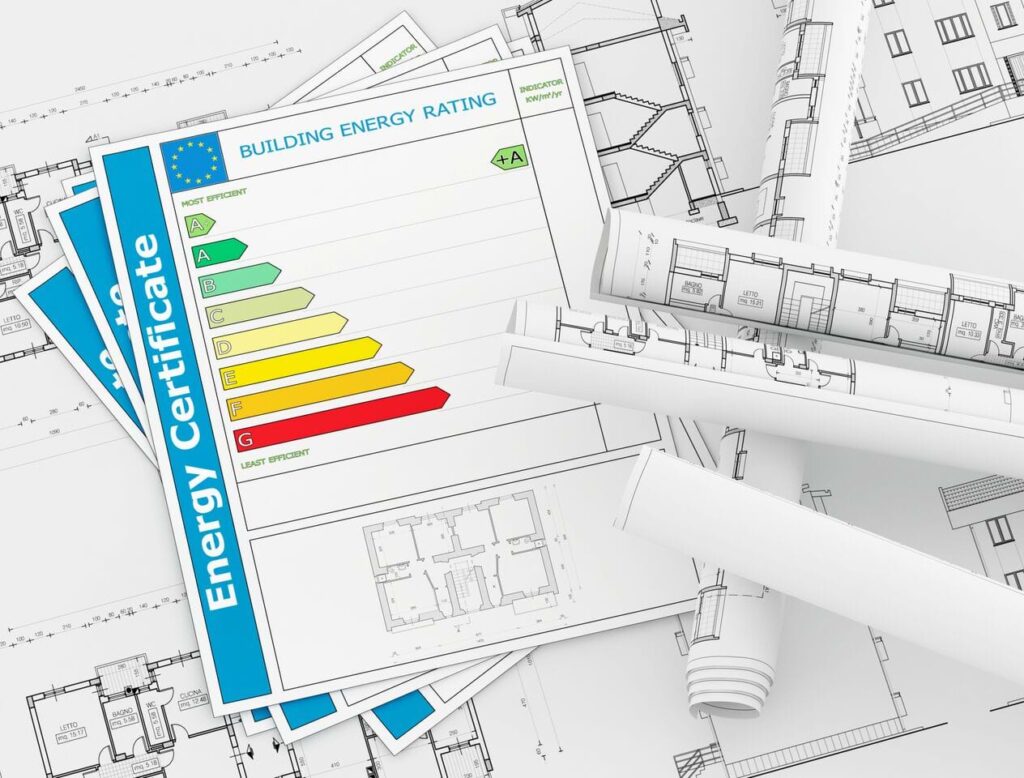
If you’re considering a second-hand home, the Building Energy Rating is worth taking seriously for reasons beyond running costs.
Green mortgages are now available from several lenders in Ireland, offering reduced interest rates for properties with an A or B energy rating. The rate differential can be meaningful over a 25 to 30-year term.
The SEAI has enhanced its grants for 2026. For first-time buyers of existing homes, new and increased grants are available including higher attic insulation grants and new grants for windows and doors. These grants don’t require the property to reach a specific overall BER rating to qualify for individual measures, which makes partial retrofitting a realistic option even on a post-purchase budget.
A lower BER property that you can buy and improve may offer better total value than a slightly higher-rated property at a premium price, depending on the works required. A structural survey and an energy assessment done before you close will tell you whether you’re buying a home or buying a project. That’s a distinction worth knowing before you sign.
First-Time Buyer Dublin: Common Questions Answered
What is the minimum deposit for a first-time buyer in Dublin?
First-time buyers need a minimum deposit of 10% of the purchase price. On a €400,000 property, that’s €40,000. Government schemes like Help to Buy can contribute toward the deposit requirement for new builds, reducing the cash you need to have saved personally.
Can I use Help to Buy on a second-hand home in Dublin?
No. The HTB scheme applies only to new builds and self-builds.
Can I use Help to Buy and the First Home Scheme together?
Yes. You can use help to buy in conjunction with the First Home Scheme, but the maximum equity contribution from First Home reduces from 30% to 20% when both are used together.
How much can I borrow as a first-time buyer in Ireland?
Four times your gross annual income is the standard, set by the Central Bank of Ireland. Some lenders can stretch to 4.75 times for eligible applicants, but those exceptions are limited and not guaranteed. Your lender will tell you exactly where you stand once you apply.
What is the difference between the First Home Scheme and the Affordable Purchase Scheme?
The First Home Scheme bridges the gap between your mortgage capacity and an open market purchase price, with the State taking a percentage equity stake. The Affordable Purchase Scheme does something different: the local authority sells you the property at below market value from the outset, retaining an equity share that reflects the discount. One meets you at market. The other changes the price.
Do I need a solicitor to buy a house?
Yes. A solicitor handles all legal aspects of the property transfer, including reviewing contracts, title deeds, and boundaries, liaising with the lender, and registering your ownership with the Property Registration Authority. Engage a solicitor before you make a formal offer, not after. Having one in place allows you to move quickly once an offer is accepted.
Looking for an Estate Agent in Dublin?
Knowing the schemes is the preparation. What most first-time buyers in Dublin tell us they wished they had known earlier is simpler: what their budget actually gets them, how to read a competitive bidding situation, and what the process feels like from the inside rather than on paper.
As Dublin estate agents since 2004, most of our first-time buyers come back to us when they sell. That only happens if the first experience was genuinely useful, not just transactional.
If you’re at the early stages and want a clear picture of where you stand before you start viewing, that conversation is the right place to start.