

If you are selling a property in Dublin and wondering whether your BER rating actually matters to buyers, the short answer is yes, the BER rating affects property value in Dublin, and the effect is measurable. A stronger rating does not just make your home more comfortable to live in. It changes what buyers are willing to pay, what mortgage rates they can access, and how quickly competing properties sell around yours.
Here is what that means in practice and why sellers and landlords in Dublin are paying closer attention to BER than they were five years ago.
What a BER Rating Actually Measures
A Building Energy Rating (BER) is an asset rating. It measures how much energy a building consumes under standardised conditions, based on the building itself rather than how the current occupants use it. The scale runs from A1 at the top to G at the bottom. A BER certificate is required by law before you can sell or rent a residential property in Ireland.
What the rating is actually assessing includes the quality of wall and attic insulation, the heating system and heating controls, how the property handles ventilation, the efficiency of the hot water system, window glazing, and whether any renewable energy sources are present. Each of these factors contributes to the final grade on the BER rating scale.
The assessment itself takes a few hours and typically costs between €150 and €300, depending on the size and complexity of the property. The assessor produces both the BER certificate and an advisory report, which lists the specific upgrades that would improve the rating. That advisory report is where the value conversation starts.
How BER Affects What Buyers Are Willing to Pay in Dublin

Research on the Irish property market consistently shows that higher-rated homes attract a premium. Properties with A or B ratings sell for more than equivalent C or D-rated homes in the same area, all else being equal. The gap is not trivial. Studies have placed the premium at anywhere from 4% to over 10% depending on location, property type, and how the broader market is performing.
In Dublin, where buyer competition is strong and mortgage lending is tightly tied to valuation, that percentage difference translates directly into euro terms that matter. A C-rated property in Dublin 5 or Dublin 7 that achieves a B2 rating after targeted upgrades can see its asking price supported at a meaningfully higher level, with less buyer negotiation on condition.
The reason is straightforward. Buyers are buying running costs alongside bricks and mortar. A home with lower energy bills, a more efficient heating system, and better insulation is a cheaper home to live in every month. Prospective buyers who understand energy performance on a scale will price that in, even if they cannot always articulate how they are doing it.
The Green Mortgage Effect
One development that has sharpened the BER conversation in Dublin is the rise of green mortgage products. Several Irish lenders now offer preferential interest rates to buyers purchasing A-rated homes. The difference in rate is modest, but over a 25 or 30-year term, even a fraction of a percentage point compounds into a significant reduction in total repayment.
This creates a direct link between the BER on the property you are selling and the financing terms available to the person buying it. A buyer who can access a green mortgage rate because your property carries an A or strong B rating has more purchasing power and a more compelling financial case for paying your asking price. It makes the sale easier to achieve.
If your property currently sits in the C or D band, it is worth understanding exactly how far it is from a B2 rating. Often the gap is smaller than sellers assume, and the upgrades required to close it cost less than the price premium they unlock.
What Upgrades Move the BER Needle Most
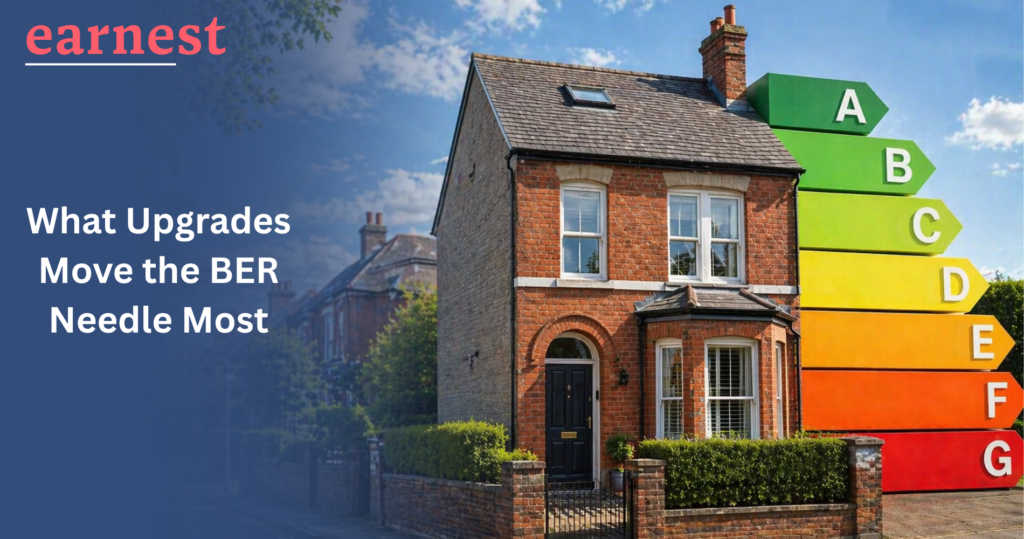
Not all upgrades deliver equal return on the BER rating scale. Some changes are high-cost and high-impact. Others are lower cost with disproportionate effect. Understanding the difference is what separates targeted investment from expensive renovation that does not shift the needle enough to justify the spend.
Attic insulation is typically the highest return upgrade available to older Dublin properties. Heat rises, and a poorly insulated attic allows significant energy loss that the assessor weights heavily. In many cases, a straightforward attic insulation job moves a property up one or even two BER grades.
Wall insulation, either cavity fill or external insulated render, is the next significant lever, particularly for properties built before the 1990s. Combined with attic insulation, these two upgrades alone can take a D or E-rated property into C territory or higher.
Heating system upgrades, particularly replacing an old oil boiler with a more efficient condensing boiler or a heat pump, can push a property significantly higher on the BER rating scale. Heat pumps in particular are assessed favourably because they use electrical energy efficiently and can draw on the grid’s increasing renewable energy mix.
Window glazing upgrades, improved heating controls, solar panels, and hot water system efficiency all contribute. SEAI grants are available for most of these upgrades, which reduces the out-of-pocket cost to the seller and improves the return on the investment. The SEAI advisory report attached to your BER certificate will tell you which upgrades have been assessed for your specific property and what the projected improvement to your rating would be.
BER Matters for Landlords as Well as Sellers
If you are a landlord rather than a seller, the BER conversation is equally relevant. Rental properties in Ireland are now subject to minimum energy efficiency requirements, with the trajectory pointing toward higher mandatory standards over time. Landlords who upgrade ahead of requirements are better positioned to attract quality tenants, justify higher rents, and avoid being caught by regulatory changes that force expensive retrofitting on a short deadline.
A rental property with a strong BER also tends to have lower maintenance demands over time. Better insulation, a more efficient heating system, and improved ventilation all reduce wear on the building and on the relationship with tenants. Lower energy costs for tenants mean fewer complaints, lower turnover, and a more stable income.
What This Means If You Are Selling in Dublin Now
The Dublin property market rewards properties that are move-in ready and low-maintenance. A strong BER rating signals both of those things clearly on every listing that appears on Daft or MyHome before a buyer ever walks through the door.
If you are planning to sell, requesting a BER assessment before you instruct an estate agent gives you time to act on the advisory report and present a stronger asset. A higher rating is not just a number. It is visible evidence of lower running costs, better comfort, and lower risk for the buyer. In a competitive market, that evidence is worth having on your side.
If you are unsure where your property currently stands or what the realistic cost of improvement looks like, a free property valuation with Earnest is a sensible first step. We work with sellers across Dublin every day and can give you a straight answer on whether a BER upgrade makes commercial sense before your property goes to market.