

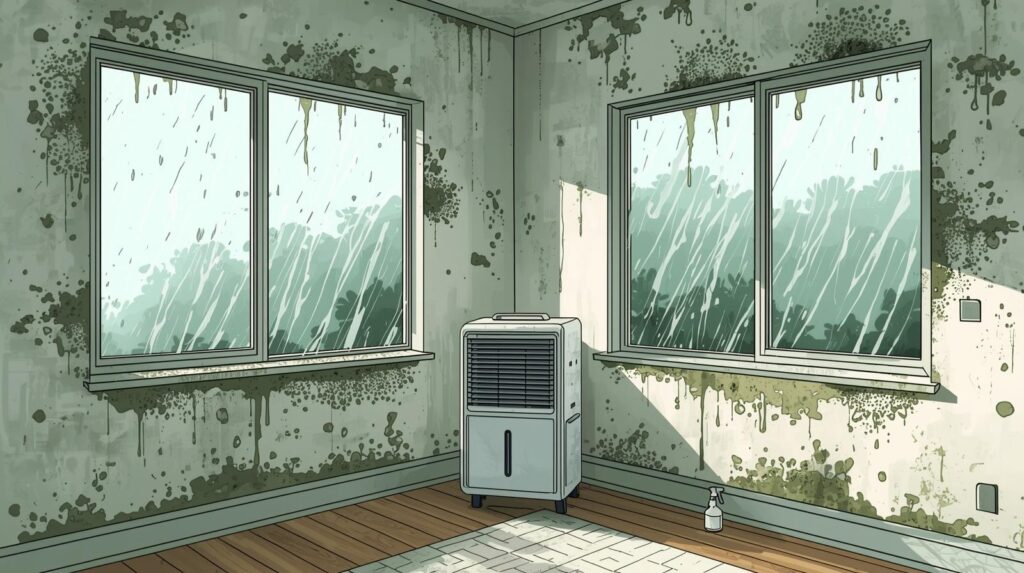
Spending more time indoors can increase the risk of mould & mildew in your home. Daily activities such as heating, boiling kettles, slow cooking, even breathing add extra moisture inside.
Combined with changes in weather, this can create the perfect environment for mould and mildew to appear. The good news is that this problem is completely preventable. In this guide, we explain 4 simple tips so you can reduce moisture, improve ventilation, and keep your home healthy.
What is Mould and Mildew?
Mould
Mould is a type of naturally occurring fungus that grows in damp, poorly ventilated areas. It reproduces through spores and can grow on food, fabrics, carpets, walls, timber, paper, and plumbing.
Mildew
Mildew is usually a thin dusting of black, grey, or white growth, often appearing on fabrics and walls. Grey-black powdery mildew is the most common type indoors and is easily recognisable.
How Mould Grows
Mould requires four conditions to grow: nutrients, warmth, time, and moisture.
- Nutrients: Materials like plaster, plywood, carpets, and furniture provide excellent food for mould.
- Warmth: Mould grows best at temperatures humans find comfortable. Heating in winter or general summer warmth can support growth.
- Time: Mould spores need time to develop—once conditions are right, they multiply.
- Moisture: Excess moisture is the easiest factor to control. High humidity, leaks, poor ventilation, closed vents, or even normal breathing can contribute. Removing moisture helps prevent growth.
How Mould Affects Health and Wellbeing
Mould and mildew can affect both physical and mental health:
- Inhaled spores may inflame airways, causing nasal congestion, wheezing, coughing, chest tightness, and throat irritation.
- Long-term exposure can worsen asthma or allergies and reduce lung function.
- Studies suggest chronic exposure can increase the risk of depression.
You can learn more about the health impacts of poor ventilation in the Home Ventilation post from gov.ie.
4 Simple Tips to Prevent Mould & Mildew
1. Ventilation
Ensure good airflow throughout your home to prevent mould & mildew. Open windows daily, keep wall vents open, and use extractor fans in kitchens and bathrooms. Fresh air prevents mould & mildew from establishing.
2. Drying Clothes
Avoid drying clothes indoors where possible. If using a dryer, ensure clothes are fully dry, or hang them near a window or dehumidifier to prevent excess moisture.
3. Use a Dehumidifier
A dehumidifier can reduce indoor humidity by up to 55%, making mould dormant and easier to clean. It also helps clothes dry faster and uses minimal energy.
4. Manage Condensation
Condensation occurs when moist air meets cold surfaces, like windows. Wipe down windows, sills, and skirting boards regularly. Maintaining ventilation and using a dehumidifier helps control condensation.
Removing Existing Mould & Mildew
Mould Killing Sprays
For small areas, sprays are effective in removing existing mould & mildew:
- Spray the surface
- Scrub thoroughly
- Rinse
- Dry completely
Fungicidal Paint
After cleaning, apply fungicidal paint to prevent recurrence. Always address the moisture source, or mould will return. Wear gloves and a mask, open windows, and never mix bleach with ammonia.
When to Call a Professional
Large infestations or hard-to-clean materials (insulation, carpets, upholstery) should be handled by specialists to ensure spores are fully removed.
Need Assistance?
If you’re an Earnest tenant and need to report a mould or mildew issue that has gotten out of control, please use our property issue reporting system. For general enquiries or advice, you can also contact us directly.