

Introduction
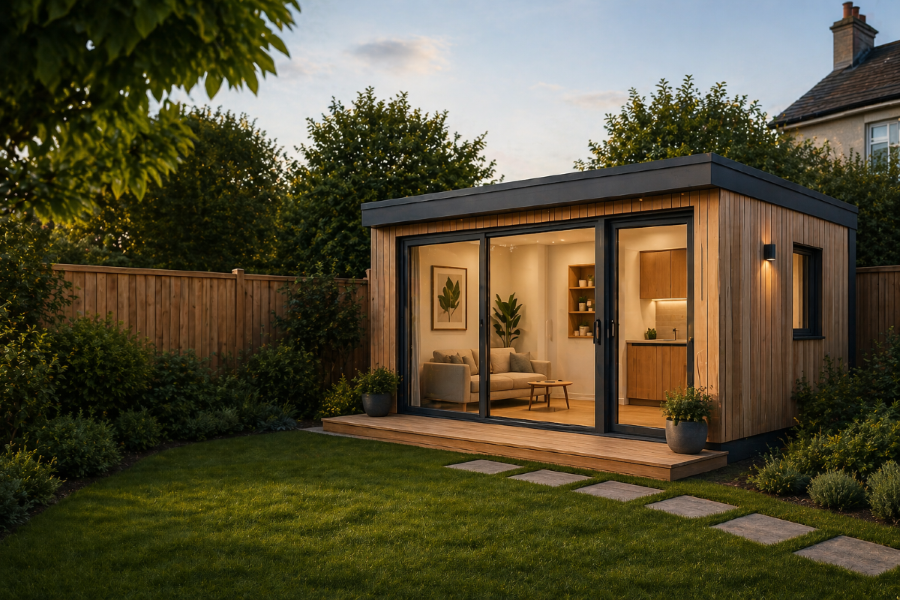
Modular housing in Ireland is at the centre of proposed planning changes that could allow small units in residential gardens without full planning permission.
While media coverage has focused on headlines, the practical implications for property owners — particularly in Dublin and other urban areas — are more important.
This article explains what is being proposed, how it fits into wider housing policy, and what it could mean for homeowners.
What is being proposed
The current modular housing proposal focuses on small residential units in existing garden spaces.
Key elements include:
- Units up to approximately 45 square metres
- Located within the garden of an existing home
- The main house must remain the primary residence
- Full compliance with building regulations
- No planning permission required, subject to conditions
In simple terms, this would allow certain garden-based structures without standard planning permission, provided they meet specific criteria.
Planning exemption does not mean no regulation
It is important to understand that planning exemption does not mean a lack of control or standards.
Even where planning permission is not required, the following still apply:
- Building regulations
- Fire safety requirements
- Structural and energy efficiency standards
So while the process may become simpler from a planning perspective, the construction itself remains fully regulated.
Rental use and legal questions
Some discussions suggest alignment with the Rent-a-Room scheme, potentially allowing limited tax-free income. However, uncertainty remains around occupancy classification.
A key issue is whether residents would be treated as:
- Tenants under Irish residential tenancy law, or
- Licensees under a more informal arrangement
This distinction is important as it affects legal protections, notice periods, and security of tenure. Further clarity is still expected.
How this fits into Ireland’s housing approach
Modular housing is becoming a key part of Ireland’s shift towards more flexible and incremental housing solutions. Instead of relying only on large-scale developments, there is growing attention on:
- Smaller-scale housing solutions
- Use of existing residential sites
- Faster construction methods such as modular building
The aim is to increase housing capacity without requiring extensive new land development.
What this could mean for homeowners in Dublin
For homeowners in Dublin and other urban areas, this change could create new opportunities.
Potential benefits include:
- Better use of existing garden space
- Accommodation for family members or dependants
- Possible supplementary rental income
However, practical considerations remain:
- Site suitability
- Access to utilities such as water, electricity, and drainage
- Maintenance responsibilities
- Planning and building compliance requirements
Ultimately, the impact will depend on how final regulations are implemented.
Practical example from the market
To help illustrate how this could work in reality, we currently have a residential property for sale in Dublin that would be suitable for a future modular garden unit, subject to final planning and regulatory conditions, with details available via our website or Daft.ie.
This example helps show how policy changes can have direct, practical implications for the way residential property is used.
A policy still developing
While the direction of policy is clear, many of the detailed rules are still being developed.
Areas that are not yet fully finalised include:
- Exact planning exemption conditions
- Tax treatment of rental use
- Legal classification of occupants
- How local authorities will apply the rules in practice
For this reason, it is best to view the proposal as an evolving framework rather than a fully finalised system.
Final thoughts
Overall, modular housing reflects a gradual shift in how residential space is used in Ireland.
For homeowners, it brings both opportunity and uncertainty, particularly around planning, rental use, and legal classification.
The key issue going forward will be how these rules apply in practice to real properties, especially in urban areas such as Dublin.